 Book Call
Brand Strategy Agency
Position your brand clearly and grow sustainably – with the right brand strategy
Helder develops clear brand strategies for B2B, B2C and D2C businesses, helping your target audiences immediately understand what your company stands for – and why they should choose you.
Tech and lifestyle brands that have built sustainable positioning with Helder brand strategy




























A clear brand strategy is the foundation for everything.
Many companies with excellent products or services build their brand and branding on shaky ground – without a solid strategic foundation or clear positioning.
The result: interchangeable communication and a lack of differentiation from competitors.
Do any of these symptoms sound familiar?
-

Your positioning is unclear
Your company has a lot to offer – but the market hardly knows what your brand actually stands for.
-
Your brand presence is inconsistent
Your website, sales materials and social media tell different stories. As a result, your brand loses trust and recognition.
-
Your brand is not customer-centric
Your communication strategy mainly reflects an internal perspective, while your customers’ pain points remain unaddressed.
-
Your brand feels generic or irrelevant
You deliberately remain vague because you are concerned about excluding potential audiences – and become interchangeable as a result.
-
There is little internal brand engagement
Your brand strategy remains theory, without real ownership in day-to-day business.
-
Your brand does not contribute to business goals
Management perceives brand as a cost driver because there is no clear connection between brand-building and leads, conversion, win rates or talent acquisition.
How to make your brand distinctive – through positioning and branding
With Helder’s brand strategy, you clearly differentiate your company from competitors, connect marketing, sales and product development into a coherent growth system, and build long-term trust with your customers.
Our Brand Frame® model gives you a tool to align strategy, brand management and communication.
-

Communicate your brand message clearly
Together with your leadership team, you define the foundations of your positioning in a brand workshop. Using the Helder Brand Frame®, we develop a clear picture of your brand.
-

Stay consistent across every channel
With branding, tone of voice and messaging documented in clear, actionable Brand Guidelines – from your website to social media.
-

Address your customers directly
With a value proposition and storytelling based on analysis and qualitative interviews, consistently built around your customers.
-
Differentiate from competitors through strategic branding
We translate your strategy into visual and verbal branding that resonates with your target audience and is easy to understand.
-

Get teams and decision-makers on board
Build internal enthusiasm and capability through brand days, onboarding sessions and workshops – so the brand is lived throughout the organisation, from interns to senior leadership.
-

Lead your company with the brand at its core
Based on your brand strategy, we develop clear guardrails for marketing, sales and HR, helping your brand contribute to long-term business value.
The Helder Brand Frame® – your framework for strategic brand management
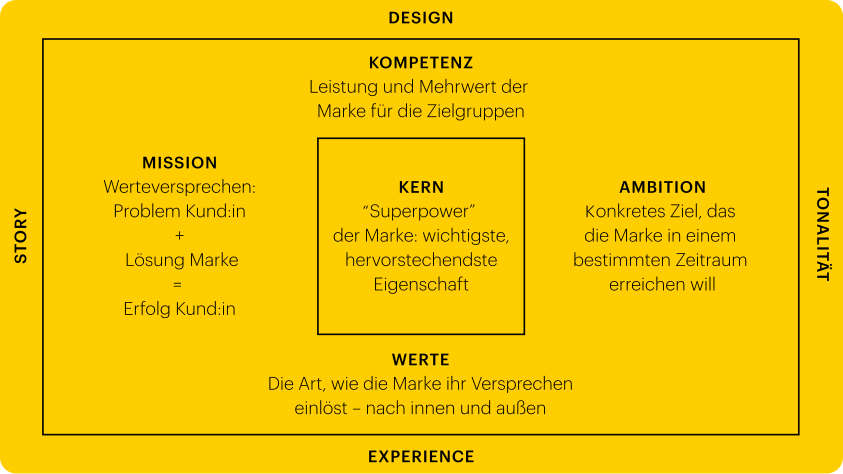
The Helder Brand Frame® is designed for both strategic and operational brand management, internally and externally.
As a brand model, it brings the essential elements of your brand together at a glance. As a framework, it provides the foundation for Brand Design, tone of voice and storytelling.
This enables you to embed the brand sustainably – within your organisation and in the market.
The essential elements of strategic brand management
Neither oversimplified nor unnecessarily complex: the Helder Brand Frame® contains the essential elements you need to manage and communicate your brand.
-

Ambition Statement
Your vision of the future: defining the role your brand aims to play in its market or industry.
-
Mission Statement
Your concrete brand mandate and elevator pitch in one: what your brand delivers, for whom, and what value it creates.
-

Competence
Your brand’s value proposition: explaining why customers should choose you.
-

Values
Your fundamental beliefs: providing guidance for the behaviour, decisions and communication of your brand.
-

Core
The essential identity of your brand: consolidating what it fundamentally stands for and what makes it distinctive.
Process
Your journey from gut feeling to Brand Strategy
Developing a brand strategy consists of four milestones.
After the kick-off and briefing, we analyse the status quo of your brand, market and competitive environment. Based on these findings, we develop your positioning together in a brand workshop.
We then translate and define the workshop results within the Brand Frame® model.
In the fourth step, the strategy is implemented – within your team and across all strategically relevant brand touchpoints.

1. Analysis
Weeks 1–3
Following the briefing and kick-off, we analyse the current state of your brand, your main competitors and the market. We also conduct qualitative in-depth interviews with internal and external stakeholders to identify the first key areas for action.
Deliverables
- Kick-off meeting
- Competitive Analysis
- Brand Audit
- Interviews
- Analysis presentation
2. Brand Workshop
Weeks 3–4
In a one-day brand workshop, we use creative and projective methods to collaboratively develop the foundations of your desired brand positioning and identity based on the Brand Frame®.
Deliverables
- Planning
- Workshop structure
- Preparation and delivery of the workshop with guided moderation and facilitation
- Inspiration presentation
- Facilitation of creative and projective workshop exercises
3. Brand Frame® Development
Weeks 4–6
Based on the workshop input, we develop your brand model. We derive and formulate your Ambition, Mission and Competence Statements as well as your brand values and brand core.
Deliverables
- Workshop documentation
- Evaluation and development of the Brand Frame®, including the rationale behind each brand element and a fully formulated strategic brand framework
- Presentation
4. Implementation
From week 6
Once the Brand Frame® has been approved, we implement it within your organisation and translate it into relevant touchpoints.
Deliverables
Depending on your requirements, for example:
- Brand Design
- Website
- Asset package
- Team onboarding
- Brand Day
Total duration: 6 weeks | Investment: from €25,000
About Helder
What sets us apart
-

10+ years of experience
in strategic branding for B2B, B2C and D2C companies.
-

Branding Enabler
Long-term brand capability through an ecosystem of Brand Frame®, videos, templates and community resources.
-

Best-in-Class Reviews
5-star ratings on Google: 100% of our clients would recommend us.
| Helder | Industry standard | |
| Process | Our process is transparent, iterative and modular. You decide which modules you want to implement with us and when. | Strategy projects often follow a fixed consulting process with limited flexibility and less visibility into intermediate steps. |
| Project team | You work directly with experienced strategists who also support the implementation. | Strategic consulting and operational implementation are often handled by separate teams. |
| Specialisation | We combine brand strategy with design and implementation, ensuring that strategies do not end with a presentation. | Strategy consultancies often provide recommendations without actively supporting the subsequent implementation. |
| Method | With the Helder Brand Frame®, we distil brand strategy into the five most important elements of a brand. | Strategy work often results in extensive documentation and complex frameworks. |
| Practical application | The strategy is developed collaboratively and applied directly to real marketing, sales and communication situations. | Strategies often remain abstract and first need to be translated internally into concrete actions. |
| Implementation | We support implementation through design, messaging, guidelines, workshops and the involvement of relevant stakeholders. | After the project is completed, responsibility for implementation usually lies entirely with the client. |
| Transparency | We openly share our methods, thinking and decision-making principles, enabling your team to continue working independently. | Methods and ways of working often remain part of the consultancy’s service and are not fully transferred to the client. |
| Client feedback | 100% recommendation rate, transparent reference projects and authentic client testimonials. | References and concrete project insights are often only available to a limited extent. |
Success Stories
What decision-makers and marketing managers say about Helder

From Webshop to Interior Brand.
“Through Helder’s branding process, we evolved from a webshop into an interior brand. The new sub-brands and brand design resonate perfectly with our target audiences. With the strategic brand framework, our teams can create content that’s always on brand. This has helped us build an even deeper emotional connection with our customers.”

Monika Adler
CEO

Now we have a brand that exceeds our expectations.
“The expertise and communication with this company are truly impressive, and we would recommend Helder without hesitation. We felt perfectly supported at all times and will continue working together even after the project is complete. Now we have a brand that exceeds our expectations – thank you!”


Modern Design Agency for the Digital Age
“We chose Helder because we appreciated their strategic, results-oriented approach. This proved true throughout the collaboration – a modern design agency for the digital age.”

Christoph Brack
Head of Marketing and Communications


"Together with Helder, we developed a narrative that makes complex services and products understandable, accessible, and desirable."
.

Nathalie Thomsen
Marketing Manager

VOOR Is Not Just a Brand – It's Our Identity
“With Helder, we didn’t just do a rebranding – we developed VOOR from the ground up together with Birgit and Maurits.
The result excites us. VOOR is not just a brand – it’s our drive, our identity. We live the result.
Thank you, Birgit, Maurits, and the entire Helder team!”

Ronny Wangelin
Co-Founder


"With Helder, we didn’t just develop a brand – we created a mindset. Together, we built a value-driven strategy and a brand design that I can identify with 100%."

Nina Hansen
Founder


"Together with Helder, we successfully developed a new name and brand identity that resonates even more strongly with our target audience."

Björn Wisnewski
Founder

From Six Data and Analytics Consulting Firms to a Data Powerhouse
“The branding process with Helder enabled us to transform from six individual, highly successful data and analytics consulting firms into a single data powerhouse. You can feel it – and you can see it.”

Thomas Schräer
Founder

Gained an understanding of who we are and where we want to go
“The collaboration was characterized by calm, care and a clear view from the outside. Through constructive challenging, we not only sharpened our brand mission statement, but also gained a deeper understanding of who we are and where we want to go. A valuable process that allows us to move forward with clarity and self-confidence.”

Thomas Theurillat
GRÜNDER
The strategic derivation makes it easy to live our brand consistently both internally and externally.
“Thanks to Helder’s support, we now have much more clarity – not only for our brand, but also in our internal communication. The strategic derivation makes it easy to live our brand consistently both internally and externally. In addition, the collaboration was not only professional and reliable, but also a great fit on a human level.”

Annika Fischer-Kautz
Head of Marketing



Strategie, die zusammenhält
Unsere Marke war dem Wachstum nicht mehr gewachsen – Kommunikation und Außenauftritt wirkten uneinheitlich. Mit Helder haben wir ein solides Markenfundament geschaffen, das unsere Werte und Identität glaubwürdig nach außen trägt. Der strategische Ansatz hat uns überzeugt. Heute spüren wir den Wandel: einheitlicher Auftritt, klares Messaging, motiviertes Team. Der Brand Guide ist unser Kompass – er spart Zeit, gibt Richtung und schafft Klarheit.

Katrin Müller-Bentrop
Strategisches Marketing

The brand workshop still forms the basis of our communication strategy today.
“The brand workshop still forms the basis of our communication strategy today. It has made the brand management of Weingut Prinz Salm much easier for us because we now have a clear basis for decision-making.”

Felix Prinz zu Salm
Owner

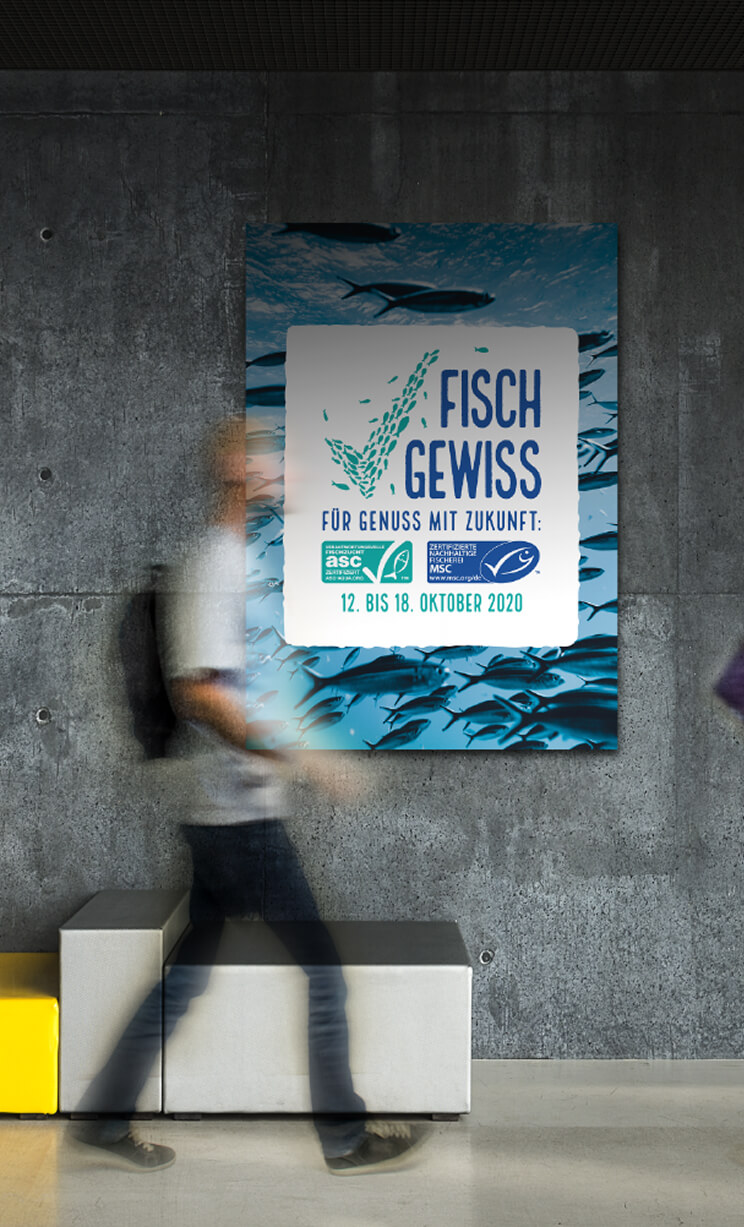
Helder has been strengthening the ASC & MSC brands for two years with naming and design
„For two years in a row, Helder’s naming and design perfectly translated the themes of sustainability and responsibility into the ASC & MSC brand awareness campaign. This has significantly increased consumer:in confidence in our seals and brand awareness.“

Manuel maillard
Marketing Manager

“Helder does a great job. Their uncomplicated manner makes every job with them fun!”

Niclas Breit
Head of Marketing Salesfive

Your individual brand strategy in three steps
-

Book a Brand Workshop
Together with your leadership team, we clarify your Competence, Ambition, Mission, Values and Brand Core.
-

Define your strategy
We translate your input into the Brand Frame® – your tool for strategic brand management.
-

Position your brand strongly
Attract the right customers more easily, achieve higher prices and grow more profitably.
Lead your brand strategically – not by gut feeling.
With a Helder brand strategy, you create the foundation to:
✓ differentiate your brand more clearly from competitors
✓ become the “first choice” for a clearly defined target audience
✓ create a competitive advantage through a distinctive brand that is difficult to copy and can defend its position over time
✓ build and expand a loyal customer base through clear values and a consistent promise
✓ command higher prices
✓ reduce the amount of explanation required and make it easier for sales teams to close deals
✓ align product development, communication and sales priorities with your brand
✓ use marketing budgets more efficiently and effectively
✓ establish your brand sustainably and contribute to long-term business value
Branding Services
-

Brand Story
Narrativ, das den Mehrwert des Angebots auf den Punkt bringt.
-

Brand Design
Translating your strategy into a distinctive visual identity and design system.
-

Brand Naming
Developing a distinctive name and narrative that captures the value of your offering.
-

Brand Communication
Rolling out your branding consistently across all relevant touchpoints.
FAQ: Brand Strategy for B2C, B2B and D2C Companies
-
What is brand strategy, and how does it differ for B2C, B2B and D2C companies?
Brand strategy is the systematic management of what your target audience associates with your company: associations, trust and expectations.
The academic foundation is provided by Professor Kevin Lane Keller’s Customer-Based Brand Equity model, published in the Journal of Marketing. A brand creates measurable economic value when its awareness and image are consistently and positively anchored in the minds of its target audience. Customers then react differently to the same offering simply because it appears under a recognised brand – and are prepared to pay more for it.
The difference between the business models lies primarily in the buying process: B2C brands operate through emotion, recognition and rapid decision-making cues. B2B brands need to establish trust across complex buying-centre decisions and often over extended periods of time.
D2C brands combine both: they establish a direct relationship with customers without relying on retailers, creating their own data channel and direct access to the market. McKinsey found that companies with a D2C brand channel achieve 30% higher annual share-price growth across industries than companies without direct brand-to-customer relationships.
At Helder, we develop brand strategies tailored to the respective business model – with positioning as the foundation that carries consistently across every channel and touchpoint.
Sources: Keller, K. L. (1993). Journal of Marketing. · McKinsey: The Direct-to-Customer Edge (2023)
-
Why does a company need an explicit brand strategy – isn’t a good product and strong sales enough?
A good product gets you onto the shortlist. A strong brand determines whether you stay there.
In a study covering almost 20,000 purchase decisions across five industries and three continents, McKinsey showed that brands present during the initial consideration stage of a purchasing decision can have up to three times the purchase probability of brands that enter the process later.
More than two-thirds of relevant touchpoints during the information phase are not generated by companies themselves, but through reviews, recommendations and third-party experiences.
Without a brand strategy, you have little influence over these touchpoints. There is also a long-term effect: research from the Ehrenberg-Bass Institute shows that in any given quarter, up to 95% of your potential customers are not actively looking for a supplier – but they may enter the market later.
Only brands already present in their minds will be considered when that moment comes. Sales reaches the active 5%. Brand strategy secures the other 95%.
The same principle applies to B2C, B2B and D2C: companies that focus exclusively on short-term sales activation pay a high price for every customer they acquire.
According to McKinsey, companies that invest strategically can generate up to 40% more revenue from the same marketing activities.
Sources: McKinsey: The Consumer Decision Journey (2009) · McKinsey: Next in Personalization 2021 · Ehrenberg-Bass Institute / LinkedIn B2B Institute: 95:5-Regel (2022)
-
We already have a strong reputation and satisfied customers – do we really need an explicit brand strategy?
Reputation is the result of past experiences. Brand strategy is the foundation for future growth. They are not the same – and one will not protect you indefinitely if the other is missing.
PwC’s 2024 brand study shows that 60% of surveyed company representatives believe consumers and decision-makers are increasingly willing to switch brands.
A strong reputation protects you as long as your competitors stand still. But when competitors position themselves more clearly, communicate more effectively or become more visible in new channels, implicit brand equity can quickly lose value.
McKinsey also shows that companies without an explicit performance-branding logic can lose up to 30% in marketing efficiency because budgets are spent on campaigns without a strategic foundation.
Kantar BrandZ has consistently demonstrated that the three key dimensions of strong brands – Meaningful, Different and Salient – are not accidental outcomes, but the result of actively managed brand strategy.
At Helder, we therefore start every project with a positioning analysis: not to replace your existing reputation, but to make it strategically actionable.
Sources: PwC Markenstudie 2024 · McKinsey: Performance Branding (2020) · Kantar BrandZ 2025
-
What does a brand strategy process look like – and what happens during each phase?
A brand strategy process is not a creative sprint. It is a structured management project.
Harvard Business School professor Jill Avery describes the basic structure in four phases: assessing the current brand position, defining positioning and brand architecture, allocating resources according to strategic priorities and identifying growth gaps.
That may sound like management consulting – and deliberately so. Brand strategy is a business decision, not a design task.
At Helder, the process works like this in practice: we begin by analysing how your brand is currently perceived – both internally and externally – as well as your competitive environment.
We then develop your positioning in a Brand Workshop:
- What is your USP – and for whom?
- Who are you differentiating yourself from?
- Why should anyone believe you?
- What are your customers’ pain points, and which pain relievers can you provide?
Based on this, we develop your strategic brand identity using the Helder Brand Frame® model:
- Competence
- Mission
- Ambition
- Values
- Brand Core
- Tone of Voice
- Brand Story
We then translate this into a strategic Brand Design system and concrete touchpoints for communication, sales and digital channels.
Sources: Prof. Jill Avery, HBS: Brand Portfolio Strategy (2016/17) · McKinsey: The Six Must-Haves for D2C Growth (2021)
-
How much does a brand strategy cost – and why is it an investment rather than an expense?
The direct answer to the cost question: it depends on scope, complexity and your starting point.
What we can say is that the return is measurable – and regularly exceeds the initial investment.
McKinsey quantifies the ROI of strategically managed branding: up to 30% greater marketing efficiency and up to 10% more revenue without increasing the budget, purely through better strategic alignment of existing activities.
For D2C businesses, the leverage is even more significant. Across a ten-year analysis of more than 200 companies, brands with their own D2C channel achieved 55% higher ROIC growth and 30% higher annual share-price growth compared with comparable businesses without such an approach.
PwC’s 2024 brand study also shows that 59% of German business representatives consider the monetary valuation of brand value extremely important.
Investment in your brand is therefore not simply a marketing expense. It is the creation of an asset that contributes to company value, customer loyalty and pricing power.
An investment in a Helder brand strategy starts at €25,000.
We work with clear project structures and defined deliverables, so you know exactly what you are getting – and what it will cost – before the project begins.
Sources: McKinsey: Performance Branding (2020) · McKinsey: The Direct-to-Customer Edge (2023) · PwC Markenstudie 2024
-
How does brand strategy differ from Corporate Design, rebranding or traditional marketing?
Corporate Design is an outcome of brand strategy – not the strategy itself.
Rebranding is the implementation of a strategic realignment, but it is not a substitute for strategy.
And marketing activates an existing brand – it does not create one.
Professor Kevin Lane Keller’s CBBE model shows that measurable brand equity is not created through design itself, but through the associations, beliefs and attitudes a brand establishes in the minds of its target audience.
Design is the tool used to trigger these associations. Without a strategic foundation, however, design becomes arbitrary.
Professor Jean-Noël Kapferer of HEC Paris makes this more concrete with his Brand Identity Prism. Brand identity consists of six dimensions:
- Physique
- Personality
- Culture
- Relationship
- Reflection
- Self-image
Corporate Design addresses the first. Brand strategy develops all six.
McKinsey puts it similarly: many companies undertake design projects and call them branding. But without a strategic foundation, every touchpoint remains an isolated experience.
A brand that builds trust only emerges when positioning, promise and visual identity work together.
At Helder, we deliberately separate these layers:
strategy first, then visual identity, then communication and touchpoints – in that order, not the other way around.
Sources: McKinsey: Performance Branding (2020) · McKinsey: The Direct-to-Customer Edge (2023) · PwC Markenstudie 2024
Ready to build a stronger brand?
Book an appointment