 Book Call
Branding for E-Commerce
From online shop to brand
Win customers not just through performance, but through a clear brand – from positioning to a consistent brand presence. So your products aren’t just clicked, but consciously chosen.
E-commerce brands that stand out from the competition with branding by Helder






Do these challenges sound familiar?
Many e-commerce companies reach the same point: campaigns drive short-term sales, but without a clear brand, long-term differentiation in the market is missing.
-

Do customers compare you based on price alone?
Competitive pressure is intense. Without clear differentiation and strong branding, many customers simply choose the cheapest option.
-
A confusing product portfolio?
New product lines are added, but without a clear structure, a growing portfolio can quickly lead to confusion – both internally and externally.
-
Are your touchpoints inconsistent?
Website, packaging, and social media all look different. Without clear guidelines, there is no consistent brand presence – and trust and recognition are lost.
-
High marketing investment, but low brand presence?
Performance marketing creates short-term peaks, but fails to build long-term brand preference. Without clear positioning, marketing becomes increasingly inefficient.
-
Growing, but without a clear direction?
New touchpoints emerge faster than clear brand guidance. Different teams make their own decisions – and the brand loses clarity.
What branding can do for e-commerce
Our branding helps e-commerce companies in Germany, Austria, and Switzerland sharpen their brand strategically, stand out from the competition, and build sustainable growth.
-

Build strong brand loyalty
A clear brand ensures that customers recognize you, build trust, and consciously choose to buy from you again.
-

Reduce price dependency
When your brand is clearly positioned, customers don’t make decisions based on price alone. You create differentiation through your perspective, offering, and recognizability.
-

Create clarity across your product range
A clear brand logic helps customers understand products faster and make the right decisions.
-

Become distinctive in the market
A distinctive brand presence ensures that your products don’t get lost among countless similar offers – and that customers remember your brand.
-

Build a consistent brand across all channels
From packaging and website to social media: make your brand instantly recognizable – whether in your own shop or on marketplaces.
-

Build a foundation for scalable growth
Your team gets a clear system that simplifies decision-making and ensures your brand stays clear as complexity grows.
Our branding for e-commerce companies
Our branding helps e-commerce companies in Germany, Austria, and Switzerland systematically develop their brand from positioning to roll-out – for clear differentiation, a well-structured product portfolio, and consistent brand management.
-
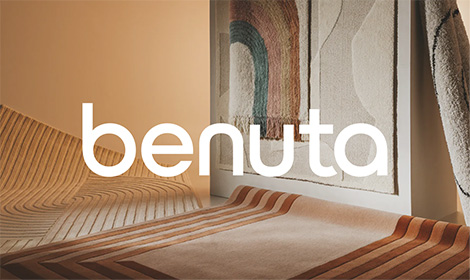
Branding for Europe’s largest online rug store
Challenge
A confusing product portfolio and unclear value proposition
Our solution
Helder positioned benuta as an empathy brand and developed sub-brands for its key target groups.
The outcome
Within 18 months, benuta evolved from an online store into a values-driven interior brand.
-
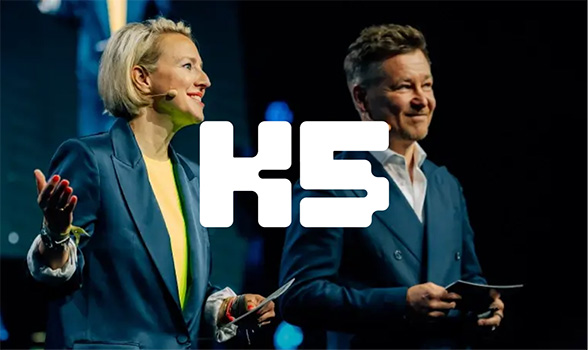
Brand architecture for an e-commerce powerhouse
Challenge
Lack of consistency and flexibility
Our solution
Helder developed a design system for the entire brand family.
The outcome
K5 positioned itself as a content powerhouse in e-commerce while staying relevant to younger target groups.
-
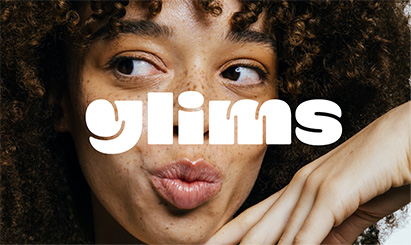
Brand development for a new supplement brand
Challenge
Differentiation in a highly competitive market
Our solution
Helder developed a strategic and visual brand identity as well as a name that brings the brand essence “shining” to life.
The outcome
With a distinctive brand presence, glims clearly stands out from the competition and connects with its relevant target audience.
Your journey from online shop to brand
Our branding process consists of three milestones: after the brand workshop and the development of your Brand Frame®, we create two design routes based on this foundation. One is then further developed and translated into brand guidelines and touchpoints.

1. Foundation – brand strategy and workshop (weeks 1-4)
- Market and competitor analysis within your market environment
- One-day workshop with your leadership team (CEO, CMO, Product, CRM)
- Development of your positioning and definition of expertise, mission, vision, values, and brand essence using the Helder Brand Frame®
You receive: Workshop documentation, a fully developed brand framework, and a completed Brand Frame® with five key statements on positioning, goals, added value, attitude, and brand essence.
2. Design – brand design system (weeks 4-8)
- Development of 2 design routes based on the Brand Frame®
- Iterative development of the selected route into a complete design system
- Once approved, documentation of the application rules in brand guidelines
- Optional: design of assets, e.g. business stationery, social media, pitch deck, UX/UI design
You receive: Design system including logo/wordmark, key visual, color palette, typography, imagery, and icons; brand guidelines with clear application rules.
3. Activation – rollout & enablement (weeks 8-12)
- Handover of all assets
- Brand enablement session for your marketing team
- Template package
- Optional: support with website implementation
You receive: Design assets, template system
Total duration: 8-12 weeks | Investment: from €60,000
Why Helder
What sets us apart
-
Proven method
With the Helder Brand Frame® process, we have already successfully delivered 100+ projects.
-

Transparent proven process
Iterative, agile, and reliable, tailored to your industry instead of a black box.
-

Best-in-class reviews
5-star Google reviews show that 100% of our clients would recommend us without hesitation.
| Helder | Industry standard | |
| Process | Our process is transparent, iterative, and modular. You decide which modules you want to implement with us and when. | The process is often offered only as a fixed overall package. Development steps remain less transparent throughout the project. |
| Project Team | You work with a dedicated team with many years of experience in brand development for e-commerce and D2C companies. | At larger agencies, contacts change more frequently and implementation is often handled by changing teams. |
| Specialization | We specialize in strategic brand development and bring 20 years of combined branding experience. | Branding is often just one part of a broader service portfolio. |
| Strategy | Every project is based on strategic brand work, including target audience, competitor, and market analysis, as well as clear positioning. | Branding often starts directly with visual concepts or moodboards, without clearly defined strategic foundations. |
| Method | With the Helder Brand Frame®, we distill your positioning into a clear decision-making framework for marketing, communication, and product portfolio. | Extensive presentations and complex models often make practical day-to-day application more difficult. |
| Design | Our design process is iterative and builds on your feedback. You can choose between two design routes. | Often, only a single design concept is presented, leaving clients with limited influence over its further development. |
| Transparency | We openly share our processes and methods and provide templates, videos, and tools for your day-to-day brand work. | Methods and ways of working are often not shared with clients. |
| Client Feedback | 100% recommendation rate, transparent case studies, and genuine client testimonials. | References and detailed project insights are often only available to a limited extent. |
What decision-makers and marketing managers say about Helder
Modern Design Agency for the Digital Age
“We chose Helder because we appreciated their strategic, results-oriented approach. This proved true throughout the collaboration – a modern design agency for the digital age.”

Christoph Brack
Head of Marketing and Communications


Now we have a brand that exceeds our expectations.
“The expertise and communication with this company are truly impressive, and we would recommend Helder without hesitation. We felt perfectly supported at all times and will continue working together even after the project is complete. Now we have a brand that exceeds our expectations – thank you!”

"Together with Helder, we successfully developed a new name and brand identity that resonates even more strongly with our target audience."

Björn Wisnewski
Founder

From Webshop to Interior Brand.
“Through Helder’s branding process, we evolved from a webshop into an interior brand. The new sub-brands and brand design resonate perfectly with our target audiences. With the strategic brand framework, our teams can create content that’s always on brand. This has helped us build an even deeper emotional connection with our customers.”

Monika Adler
CEO

"With Helder, we didn’t just develop a brand – we created a mindset. Together, we built a value-driven strategy and a brand design that I can identify with 100%."

Nina Hansen
Founder

The strategic derivation makes it easy to live our brand consistently both internally and externally.
“Thanks to Helder’s support, we now have much more clarity – not only for our brand, but also in our internal communication. The strategic derivation makes it easy to live our brand consistently both internally and externally. In addition, the collaboration was not only professional and reliable, but also a great fit on a human level.”

Annika Fischer-Kautz
Head of Marketing
Three steps to a representative brand design.
-

Book a brand workshop
In our brand workshop, you define your expertise, ambition, mission, values, and brand essence.
-

Define your identity
We translate your identity and strategy into a brand design that speaks for you – 24/7.
-

Reach your customers
You launch a brand that resonates with children and that your team is proud of.
Let your brand design speak for you – at every touchpoint.
With strategic brand design by Helder, you create a visual identity that:
✓ clearly communicates your brand message
✓ makes your brand’s performance and value visible and tangible
✓ clearly differentiates you from the competition
✓ speaks for you consistently across all marketing channels – 24/7
Branding Services
-
Brand Strategy
Your strategic foundation for naming.
-

Brand Design
Translating the name into a distinctive logo and design system.
-

Brand Naming
A narrative that gets to the heart of your offering’s value.
-

Brand Communication
Roll-out of your branding across all touchpoints.
Insights from our K5 masterclass with benuta
Together with the team from benuta, we spoke at the K5 Future Retail Conference about how e-commerce companies can use strategic branding to stand out from the competition.
The recording offers insights into the branding process behind one of the most successful and well-known interior brands in German-speaking e-commerce.
Ready to take the step from shop to brand?
Schedule a no-obligation consultation and discover how strategic branding can take your brand to the next level.
Frequently asked questions about branding for e-commerce
-
What is the difference between brand strategy and brand design in e-commerce?
Brand strategy defines the foundation of your brand: positioning, target audience, differentiation, and brand promise. Brand design translates this strategy into visible elements such as your logo, colors, typography, or packaging.
Many e-commerce companies invest in design or templates early on without a clear strategic foundation. Over time, this often leads to an inconsistent brand presence. A clear brand strategy ensures that:
- the value of your products is understood more quickly
- customers recognize your brand
- marketing activities feel more consistent
At Helder, we consistently work strategy-first: in the Brand Workshop, we develop your Brand Frame® as the foundation for all further decisions. Only then do we create the design as the visible expression of your identity.
-
When is branding worthwhile for an e-commerce company?
Branding becomes especially valuable when growth brings new complexity. Typical moments include:
- your product range is growing significantly
- new product lines or categories are being introduced
- you sell across multiple channels (e.g. D2C, marketplaces, retail)
- your brand feels inconsistent or interchangeable
- repeat purchases fall short of expectations
Many e-commerce companies start with a functional online shop and grow successfully through performance marketing. At some point, however, operational measures alone are no longer enough. That is when a clear brand becomes a key driver of differentiation, orientation, and long-term brand loyalty.
-
Does branding still work if performance marketing is already performing well?
Yes – in fact, this is when branding can be especially effective.
Performance marketing generates short-term sales, but rarely builds long-term brand preference. If your brand is not clearly recognizable, your dependence on discounts and new campaigns can increase over time. A strong brand complements performance marketing by:- supporting repeat purchases
- building trust
- creating differentiation
- improving campaign efficiency
Research by Peter Field suggests that investing 60% in brand building and 40% in performance marketing can drive sustainable growth.
-
How long does it take to develop an e-commerce brand?
A complete branding process typically takes 8–12 weeks, from strategy to the first ready-to-use applications.
The process is divided into three phases:Weeks 1–4: Analysis, Brand Workshop, and development of your Brand Frame®
Weeks 4–8: Development of the brand design and design system
Weeks 8–12: Creation of brand guidelines and preparation for the roll-out
Moving faster usually means making compromises, which often leads to additional effort or inconsistencies later on. A structured process saves time in the long run by enabling clear decisions.
-
How much does professional branding for an e-commerce brand cost?
The investment depends primarily on the scope and complexity of the project.
Typical investment levels:- Brand analysis from €5,000
- Brand strategy including workshop and Brand Frame® from €15,000
- Brand design from €18,500
- Brand guidelines from €5,000
The overall investment is mainly influenced by:
- the number of products or product lines
- the complexity of the brand architecture
- the number of relevant touchpoints
- the desired level of implementation
-
What sets Helder apart from traditional branding agencies or large consultancies?
Three key differences:
- Speed: 8–12 weeks instead of 6–9 months at large network agencies.
- Practicality: Our Brand Frame® is a tool for everyday brand decisions, not an 80-page PDF document.
- Involvement: You get to know the people who will actually work on your project from the very beginning, with full responsibility and consistent collaboration throughout.
-
Can we develop our brand strategy internally with our marketing team?
In principle, this is possible – but in practice, it is often difficult.
Typical challenges include:- a lack of external perspective
- different interests within the company
- a lack of methodological structure
- decisions being postponed or watered down
A facilitated external process helps teams make clear decisions and bring different perspectives together.
Alternatively, we can also support you selectively, for example through workshop facilitation or strategic sparring. -
How does branding specifically impact repeat purchases and brand loyalty?
A clear brand primarily improves recognition and trust. When customers understand and recognize a brand, they are more likely to:
- make repeat purchases
- recommend the brand to others
- build long-term brand loyalty
This is particularly important in e-commerce: the stronger the brand perception, the less revenue depends on short-term promotions or discounts. Branding does not work in isolation, but provides the foundation for consistent communication across all touchpoints.
-
Does this approach also work for larger product ranges or product portfolios?
Yes – especially as product ranges grow, a clear brand structure becomes increasingly important. Without a clear brand logic, it can quickly lead to:
- unclear relationships between products
- inconsistent communication
- difficulties for customers to navigate the portfolio
Our approach includes:
- analyzing the existing portfolio
- developing a clear brand architecture
- defining naming and structuring principles
- creating a clear visual hierarchy
The result is a product portfolio that is clearly structured and easy to navigate – for customers as well as internal teams.
-
How do we measure the success of branding in e-commerce?
Branding has an impact not only on how your brand looks, but also on measurable changes across the customer journey.
Typical effects can be seen in metrics such as:- Conversion rate: Companies with consistent brand management achieve higher revenues on average
- Marketing efficiency: According to studies, strong brands generate up to 58% more leads while reducing marketing costs by 33% (Forrester Research)
- Brand awareness and brand preference: Consistent brand management can increase revenue by 10–20% because customers recognize and prefer brands more quickly (McKinsey & Company).
Branding rarely has an immediate impact, but builds over time. Initial effects often become visible within 6–12 months.
Ready to Take the Step from Shop to Brand?
Schedule a no-obligation consultation now.