 Book Call

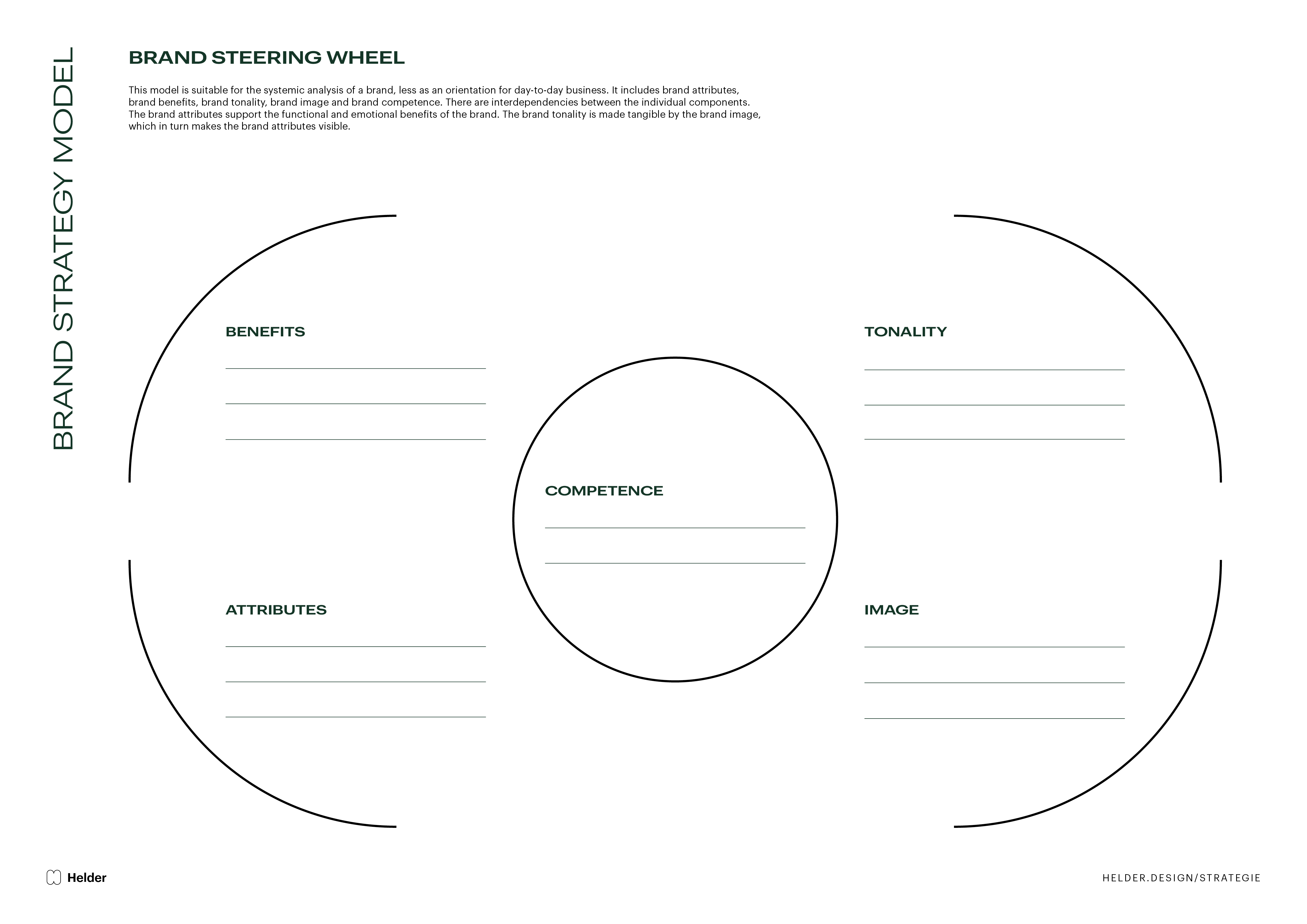
Interrelationships within a brand: Brand steering wheel according to Esch.
This model is suitable for the systemic analysis of a brand, less as an orientation for the day-to-day business. It includes brand attributes, brand benefits, brand tonality, brand image and brand competence. There are interdependencies between the individual components.
More Brand Strategy Templates
-
Summarize your brand identity at a glance: With our Brand Frame® template
-
The SWOT analysis is a proven strategic method that helps companies to identify their strengths, weaknesses, opportunities and threats.
-
A mission statement formulates the added value of a brand’s services and is an essential part of the brand identity.
-
Define for whom and for which needs the brand offers solutions
-
Define a specific goal that the brand wants to achieve within a defined period of time.
-
Align the social added value, the needs of the target group and your own goals.
-
In order to develop a successful brand strategy, it is important for companies to analyze their target groups in detail. The creation of buyer personas helps to create a better understanding of the target group.
-
Clarify the Why, How, and What of your brand to form the strategic foundation.
-
Define the brand identity on 3 different levels with the identity prism template.
-
The brand steering wheel according to Esch is suitable for a systemic analysis of the brand.
-
Develop brand values with examples and exercises and define what the brand stands for
-
The Unilever Brand Key is a brand strategy model, focuses on competitors and target groups.
-
The Bates Brand Wheel captures a brand’s essence in 5 steps, analyzing attributes, benefits, values, and personality to communicate the core identity.
-
Define the brand personality: with the Brand Personality Sliders template.











Do you need help defining your brand strategy?
We are happy to consult you.
