 Book Call

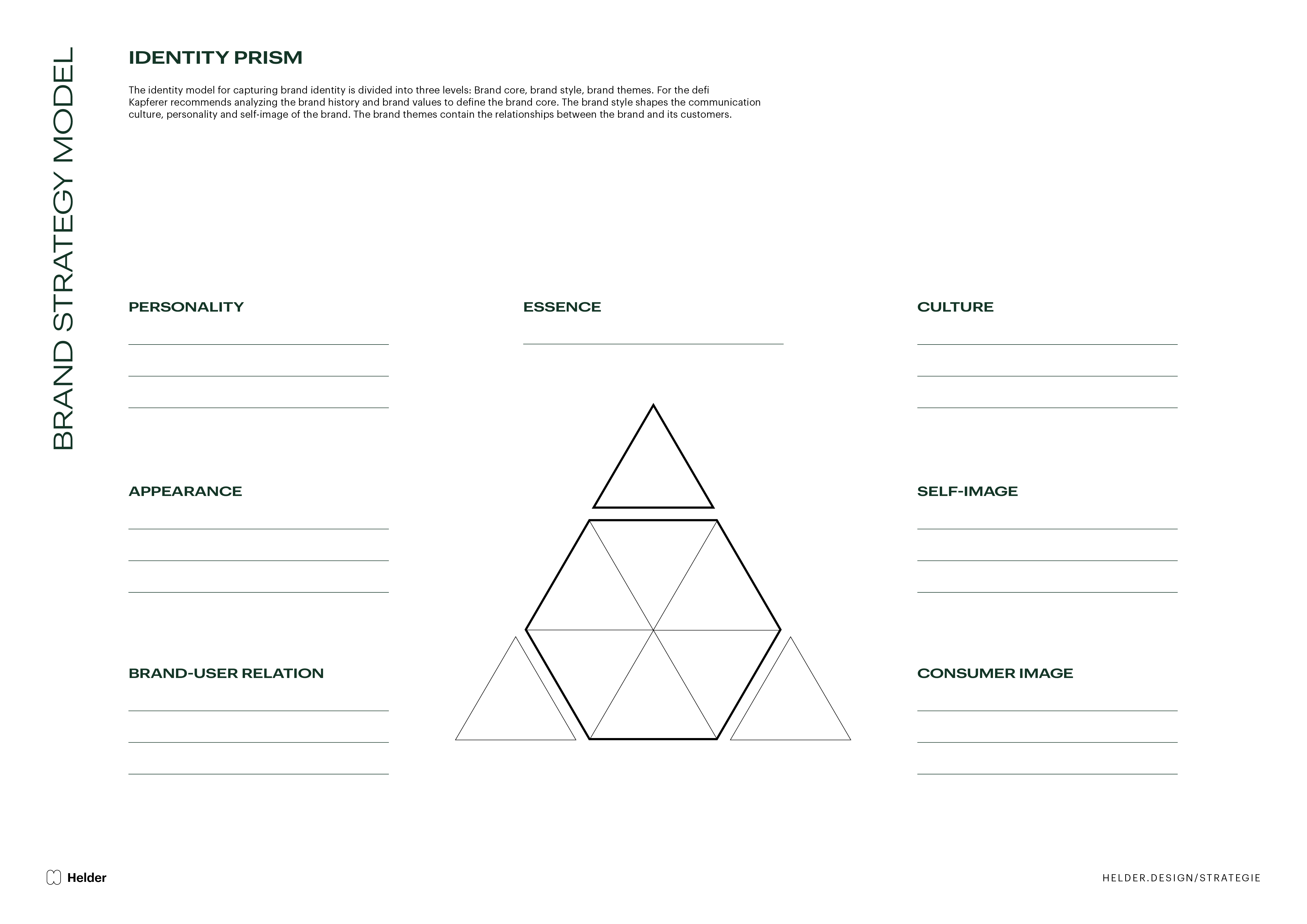
Brand identity on three levels: Identity prism according to Kapferer
The identity model for capturing brand identity is divided into three levels: Brand core, brand style, brand themes. For the definition of the brand core, Kapferer recommends an analysis of the brand history as well as the brand values. The brand style shapes the communication of the brand’s culture, personality and self-image. The brand themes contain the relationships between the brand and the customers.
More Brand Strategy Templates
-
Summarize your brand identity at a glance: With our Brand Frame® template
-
The SWOT analysis is a proven strategic method that helps companies to identify their strengths, weaknesses, opportunities and threats.
-
A mission statement formulates the added value of a brand’s services and is an essential part of the brand identity.
-
Define for whom and for which needs the brand offers solutions
-
Define a specific goal that the brand wants to achieve within a defined period of time.
-
Align the social added value, the needs of the target group and your own goals.
-
In order to develop a successful brand strategy, it is important for companies to analyze their target groups in detail. The creation of buyer personas helps to create a better understanding of the target group.
-
Clarify the Why, How, and What of your brand to form the strategic foundation.
-
Define the brand identity on 3 different levels with the identity prism template.
-
The brand steering wheel according to Esch is suitable for a systemic analysis of the brand.
-
Develop brand values with examples and exercises and define what the brand stands for
-
The Unilever Brand Key is a brand strategy model, focuses on competitors and target groups.
-
The Bates Brand Wheel captures a brand’s essence in 5 steps, analyzing attributes, benefits, values, and personality to communicate the core identity.
-
Define the brand personality: with the Brand Personality Sliders template.









Do you need help defining your brand strategy?
We are happy to consult you.
