 Book Call

FREE TEMPLATE
Brand Values Template: Define What Your Brand Stands For
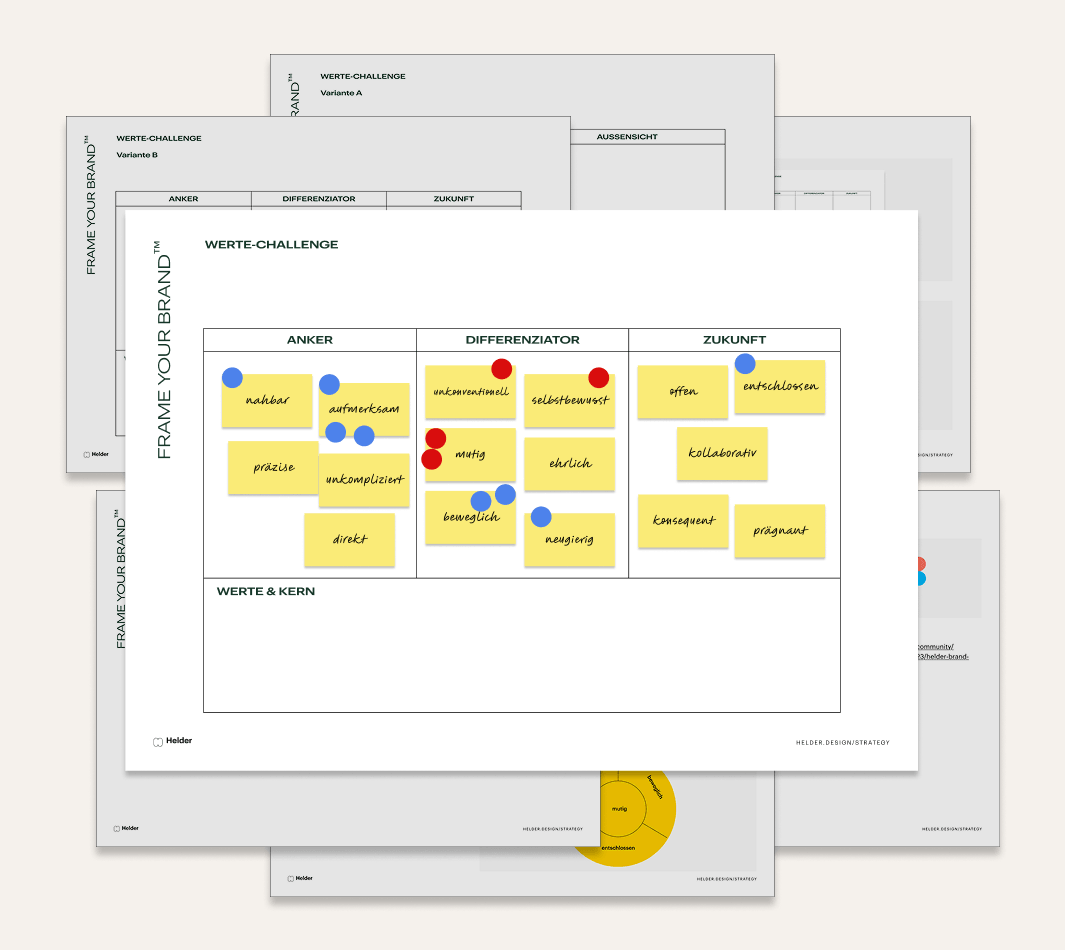
Use our free Brand Values Template to define three brand values and a brand core with your team or clients. The Values Challenge helps you prioritize the characteristics that define your brand. Includes step-by-step instructions, an example, and a video tutorial.
What’s Included in the Download
-

PDF-Vorlage
Includes templates, instructions, and brand values cards.
-

Miro and FigJam Boards
For remote workshops with your team or clients.
-

Video Tutorial
Brand strategist Marina explains step by step how to use the template.
How to Define Brand Values: The Values Challenge Explained Step by Step
When You Need Brand Values
The Values Challenge helps you bring different perspectives together to establish a shared set of values for your brand.
-

Before a Rebranding
When you want to clarify what your brand stands for and which values should shape its design, tone of voice, and brand experience.
-

For Employee Recruitment
Help applicants and new team members understand what your brand stands for and what that means for working together.
-

When Your Values Are Too Generic
When terms like “professional” and “innovative” say too little about what truly sets your brand apart.
What You’ll Get from the Values Challenge
- Three prioritized brand values instead of a long list.
- A brand core that captures your brand’s personality in a nutshell.
- A foundation for design, tone of voice, culture, and brand experience.
Common Mistakes
- Too many values: The more terms you choose, the less memorable they become.
- Confusing basic expectations with brand values: Being “professional” or “reliable,” for example, is generally expected.
- Turning the exercise into a wish list: A value must already reflect your brand and have the potential to develop credibly over time.
How to Define Brand Values: Step-by-Step Guide
Use this exercise in a workshop with your team or clients. You can work directly with the template or transfer the content to a whiteboard. You’ll need sticky notes and voting dots in two different colors.
1. Choose Your Categories
First, prepare your whiteboard or select the appropriate template. If you’ve already conducted customer interviews, distinguish between external and internal perspectives. Add insights from the interviews to the board before the workshop.
If you don’t have an external perspective, use the categories Anchor, Differentiator, and Future instead.
The Anchor represents characteristics that consistently define your brand today. The Differentiator covers characteristics that set your brand apart from competitors. The Future focuses on values you want your brand to embody more strongly going forward.
2. Collect Ideas
Each participant starts by collecting relevant words and writing them on individual sticky notes or directly in the template.
Next, everyone presents their ideas, and the group collects them on the whiteboard.
Important: Use just one word or idea per sticky note. This ensures everyone knows exactly what they’re voting on later.
At this stage, challenge generic terms. Conducting a competitor analysis beforehand helps you identify values that many brands in your category already claim.
3. Vote on the Ideas
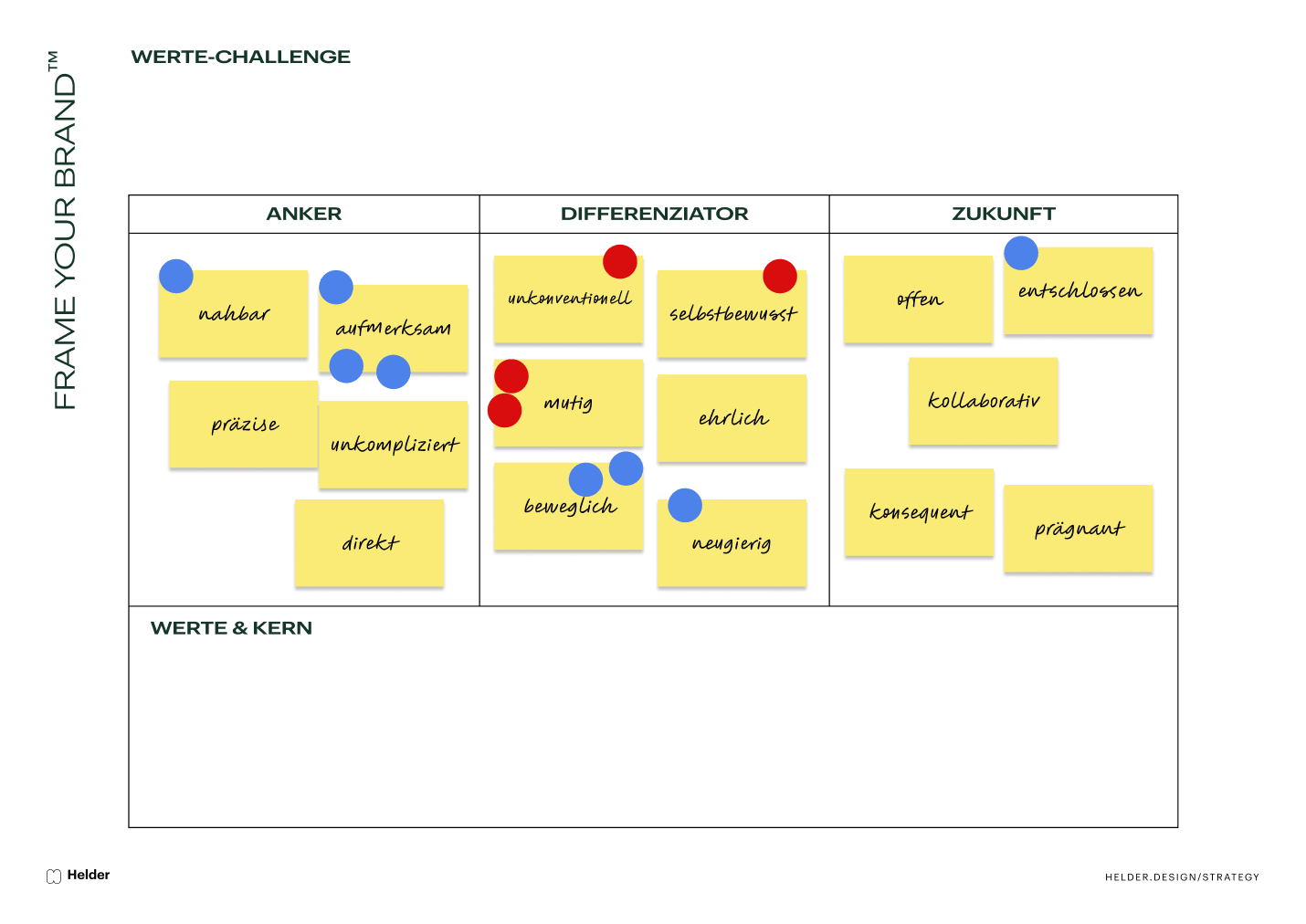
Each participant receives three voting dots in one color for the brand values and one dot in a second color for the brand core.
The three dots can be assigned to their own ideas, those of other participants, or suggestions from customers.
For the single dot, participants answer one question: If only one characteristic could define your brand, which would it be?
Next, sort the terms according to the votes they received. This creates two rankings: one for the brand values and one for the brand core.
4. Select Your Values and Brand Core
Use the rankings as the starting point for a group discussion. Discuss the terms with the most votes, overlapping ideas, and ties.
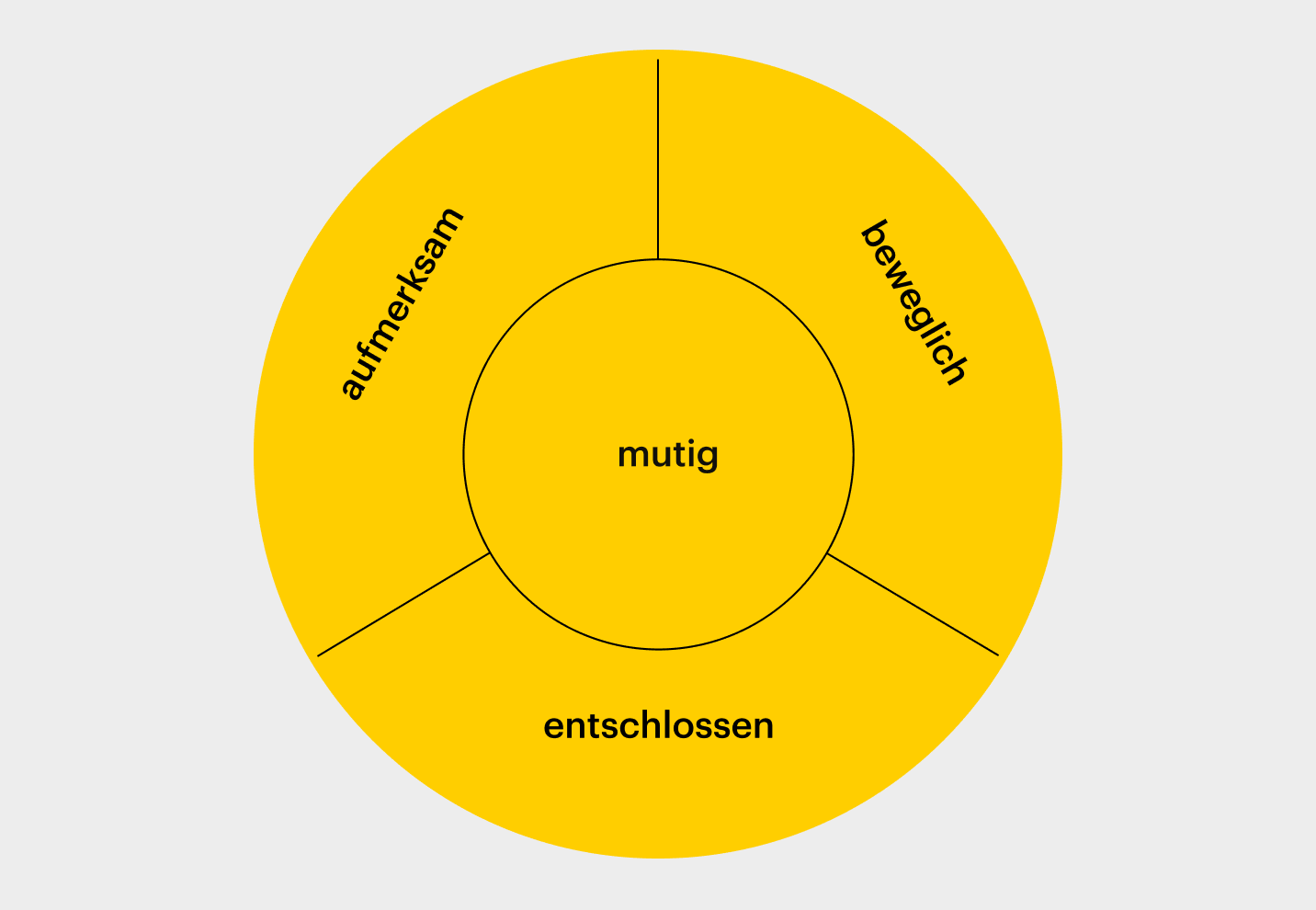
The goal is to agree on three brand values and one brand core.
Next, define what each term means in practice. After all, a value like “bold” is only useful when everyone understands what being bold means for your brand and why it matters.
Brand Values Examples for Your Workshop
Generic values such as “reliable,” “professional,” or “high-quality” are often basic expectations. While important, they rarely help differentiate a brand.
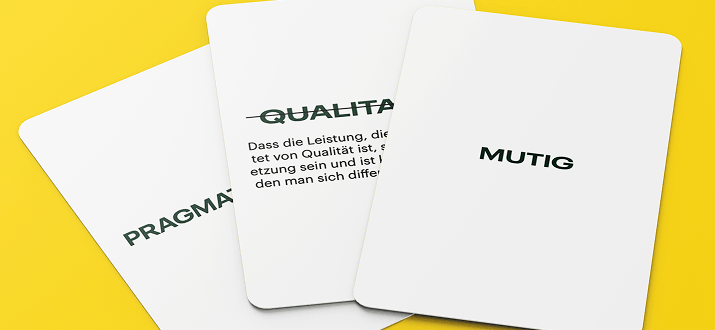
If you’re struggling to find the right words during your workshop, the PDF also includes a set of brand values cards with specific terms to inspire your team.
Example: Values Challenge for a Software Company
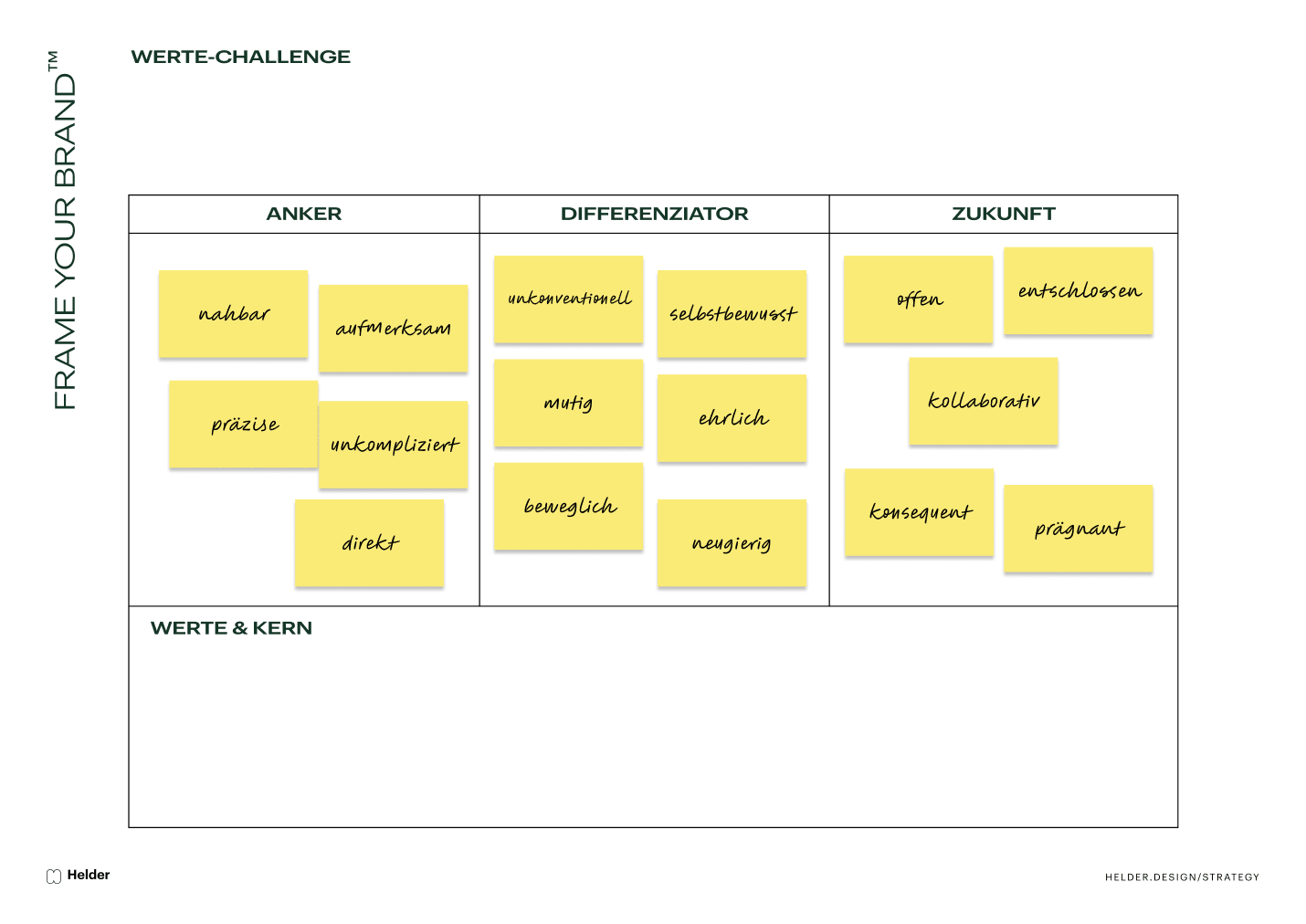
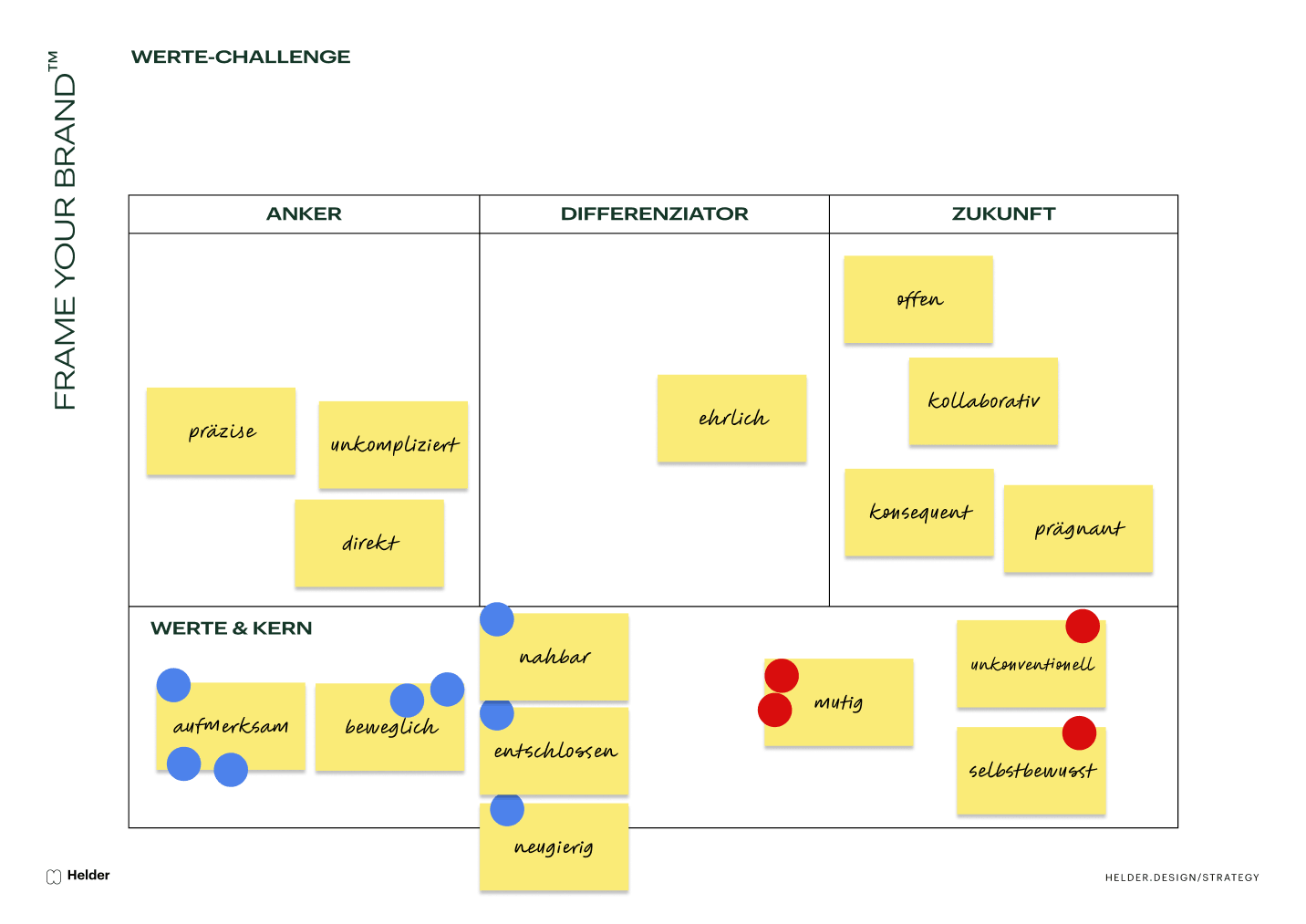
This example features a B2B software company undergoing a rebranding. The brand values are developed using the three categories Anchor, Differentiator, and Future.
Ideas Are Collected and Presented
Participants Vote on Brand Values and Brand Core
Ideas Are Ranked and Discussed
The Result: Three Brand Values and One Brand Core
Download the Brand Values Template
Get the Brand Values Template, including step-by-step instructions and links to the Miro and FigJam boards. Everything you need to run the Values Challenge in your next brand strategy workshop.

Values Challenge Template, Brand Core Template, and Brand Values Cards
Download Templates
Learn Brand Strategy or Develop It Together?
Learn how to develop brand strategies yourself in our training, or work with us to build the strategic foundation of your brand in a collaborative workshop.
-

Brand Strategy Training
Learn how to develop brand strategies using our Brand Frame® method and confidently plan and facilitate strategic brand workshops.
-

Brand Workshop with Helder
We design and facilitate your brand workshop, turning the results into a clear strategic foundation for your brand.
More Brand Strategy Templates
-
Summarize your brand identity at a glance: With our Brand Frame® template
-
The SWOT analysis is a proven strategic method that helps companies to identify their strengths, weaknesses, opportunities and threats.
-
A mission statement formulates the added value of a brand’s services and is an essential part of the brand identity.
-
Define for whom and for which needs the brand offers solutions
-
Define a specific goal that the brand wants to achieve within a defined period of time.
-
Align the social added value, the needs of the target group and your own goals.
-
In order to develop a successful brand strategy, it is important for companies to analyze their target groups in detail. The creation of buyer personas helps to create a better understanding of the target group.
-
Clarify the Why, How, and What of your brand to form the strategic foundation.
-
Define the brand identity on 3 different levels with the identity prism template.
-
The brand steering wheel according to Esch is suitable for a systemic analysis of the brand.
-
Develop brand values with examples and exercises and define what the brand stands for
-
The Unilever Brand Key is a brand strategy model, focuses on competitors and target groups.
-
The Bates Brand Wheel captures a brand’s essence in 5 steps, analyzing attributes, benefits, values, and personality to communicate the core identity.
-
Define the brand personality: with the Brand Personality Sliders template.


Habt ihr Feedback zu unseren Vorlagen?
Schreibt uns an!

Marina Mengis
Brand Strategy